There are lands whose stories can only be heard when we truly listen. Bát Tràng, a centuries-old pottery village on the banks of the Red River, is one such place — where I felt the whispers of history hidden deep within the clay and glaze.
On Friday morning, Grades 4 and 5 set off for Bát Tràng with excitement glowing in our eyes. A light drizzle painted the scene in gentle melancholy, softening the mossy rooftops with its touch. The red brick road leading into the village felt like a bridge to the past, carrying us into a realm of memory.
At the Pottery Museum, I stood in awe before the collection of the late People’s Artisan Vũ Thắng, gathered over 50 years of devotion. Under the warm yellow light, the jars, pots, and vases seemed to breathe — not just clay and glaze, but the very soul of generations of artisans.
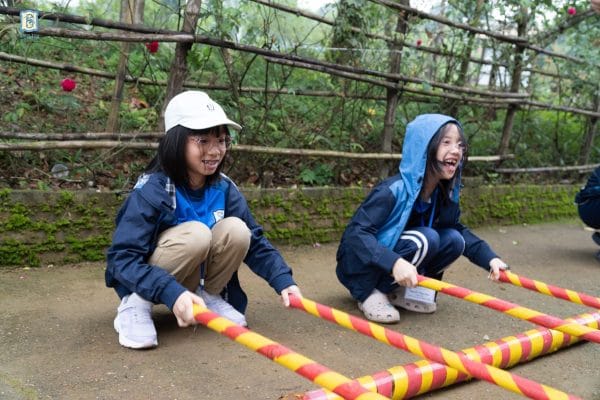
We joined the Vietnamese version of “Running Man”, dashing through ancient houses and quiet communal courtyards. Every corner, every tale retold by our guides felt like a missing piece completing the vivid mosaic of history. A calligraphy master gifted us meaningful words like “hiếu học” (love for learning), “chăm ngoan” (diligence), and “học giỏi” (academic excellence) — his brushstrokes like tiny flames warming the hearts of young students.
In the afternoon, we eagerly pieced together mosaic artworks from colorful ceramic shards. And when the “Path of Light” exhibition came alive, the space transformed into a world of wonder — driftwood and scraps of clay took shape as Buddha, Mother, and national heroes like Quang Trung – Nguyễn Huệ and Uncle Hồ. The light, once thought to simply illuminate, revealed its deeper magic: the power to tell stories and breathe soul into the inanimate.
As the trip came to an end, a warm resonance still lingered within me. I realized that beneath the soil of our homeland, the light of the artist’s hands continues to quietly ignite the spirit of Vietnam — humble, yet profoundly magnificent.
(By Nguyễn Ngọc Anh & Lê Nguyễn Hà My – Class 5A2)